> For the complete documentation index, see [llms.txt](https://docs.neevcloud.com/llms.txt). Markdown versions of documentation pages are available by appending `.md` to page URLs; this page is available as [Markdown](https://docs.neevcloud.com/neevcloud-products/monitoring/smart-monitoring-with-prometheus-and-grafana.md).
# Smart Monitoring with Prometheus & Grafana
Grafana is an open-source analytics and visualization platform that connects to data sources, such as Prometheus, to create dashboards, alerts, and visualize real-time performance metrics.
Prometheus is an open-source monitoring and alerting toolkit that collects time-series metrics from targets like Node Exporter, stores them locally, supports PromQL for querying, and integrates with tools like Grafana for visualization
Node Exporter is a Prometheus exporter that exposes hardware and operating system metrics, including CPU usage, memory, disk and filesystem statistics, network I/O, and system load.
## Prerequisite
* Ensure that the Grafana server is up and running. If it's not, refer to this [article](/neevcloud-guide/neevcloud-knowledgebase/set-up-grafana/install-grafana-and-prometheus-on-ubuntu-22.04.md)
Now, set up Prometheus and Node Exporter on another node and visualize the data on the Grafana dashboard.
## Create a Prometheus System User
Prometheus should run as a non-login system user:
```
sudo useradd --system --no-create-home --shell /bin/false Prometheus
```
Then create a directory
```
sudo mkdir prometheus
```
Download and install the Prometheus
```
wget https://github.com/prometheus/prometheus/releases/download/v2.47.1/prometheus-2.47.1.linux-amd64.tar.gz
```
Extract Prometheus files, move them, and create directories:
```
tar -xvf prometheus-2.47.1.linux-amd64.tar.gz
cd prometheus-2.47.1.linux-amd64/
sudo mkdir -p /data /etc/prometheus
sudo mv prometheus promtool /usr/local/bin/
sudo mv consoles/ console_libraries/ /etc/prometheus/
sudo mv prometheus.yml /etc/prometheus/prometheus.yml
```
Ensure Prometheus owns its files:
```
sudo chown -R prometheus:prometheus /etc/prometheus/ /data/
```
Create a systemd unit configuration file for Prometheus:
```
vi /etc/systemd/system/prometheus.service
```
```
[Unit]
Description=Prometheus
Wants=network-online.target
After=network-online.target
StartLimitIntervalSec=500
StartLimitBurst=5
[Service]
User=prometheus
Group=prometheus
Type=simple
Restart=on-failure
RestartSec=5s
ExecStart=/usr/local/bin/prometheus \
--config.file=/etc/prometheus/prometheus.yml \
--storage.tsdb.path=/data \
--web.console.templates=/etc/prometheus/consoles \
--web.console.libraries=/etc/prometheus/console_libraries \
--web.listen-address=0.0.0.0:9090 \
--web.enable-lifecycle
[Install]
WantedBy=multi-user.target
```
Reload systemd and restart the service:
```
sudo systemctl enable prometheus
sudo systemctl start Prometheus
sudo systemctl status Prometheus
```
You can access Prometheus in a web browser using your server’s IP and port 9090
```
http://your-server-ip:9090
```
## Install Node Exporter
Create User
```
sudo useradd --system --no-create-home --shell /bin/false node_exporter
```
Create a directory
```
sudo mkdir node-exporter
```
Download and install the Node-Exporter
```
wget https://github.com/prometheus/node_exporter/releases/download/v1.6.1/node_exporter-1.6.1.linux-amd64.tar.gz
```
Extract Prometheus files, move them, and create directories:
```
tar -xvf node_exporter-1.6.1.linux-amd64.tar.gz
sudo mv node_exporter-1.6.1.linux-amd64/node_exporter /usr/local/bin/
```
Create a systemd unit configuration file for Node-exporter
```
vi /etc/systemd/system/node_exporter.service
```
```
[Unit]
Description=Node Exporter
Wants=network-online.target
After=network-online.target
StartLimitIntervalSec=500
StartLimitBurst=5
[Service]
User=node_exporter
Group=node_exporter
Type=simple
Restart=on-failure
RestartSec=5s
ExecStart=/usr/local/bin/node_exporter --collector.logind
[Install]
WantedBy=multi-user.target
```
Reload systemd and restart the service:
```
sudo systemctl enable node_exporter
sudo systemctl start node_exporter
sudo systemctl status node_exporter
```
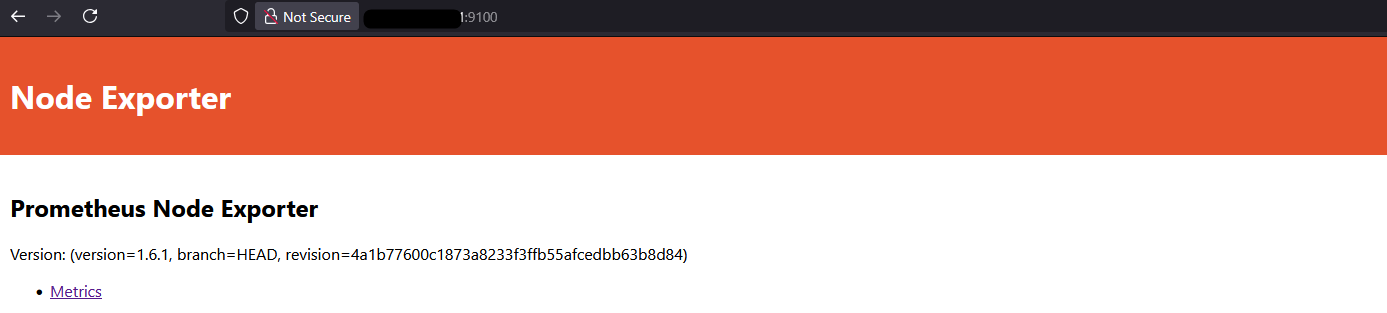
You can access Node exporter in a web browser using your server’s IP and port 9100
```
http://your-server-ip:9100
```
**Prometheus Configuration:**
```
vi /etc/prometheus/prometheus.yml
```
```
global:
scrape_interval: 15s
scrape_configs:
- job_name: 'prometheus'
static_configs:
- targets: ['localhost:9090']
- job_name: 'node_exporter'
static_configs:
- targets: ['localhost:9100']
```
```
systemctl restart prometheous
```
To install Grafana, follow this [link](/neevcloud-guide/neevcloud-knowledgebase/set-up-grafana/install-grafana-and-prometheus-on-ubuntu-22.04.md).
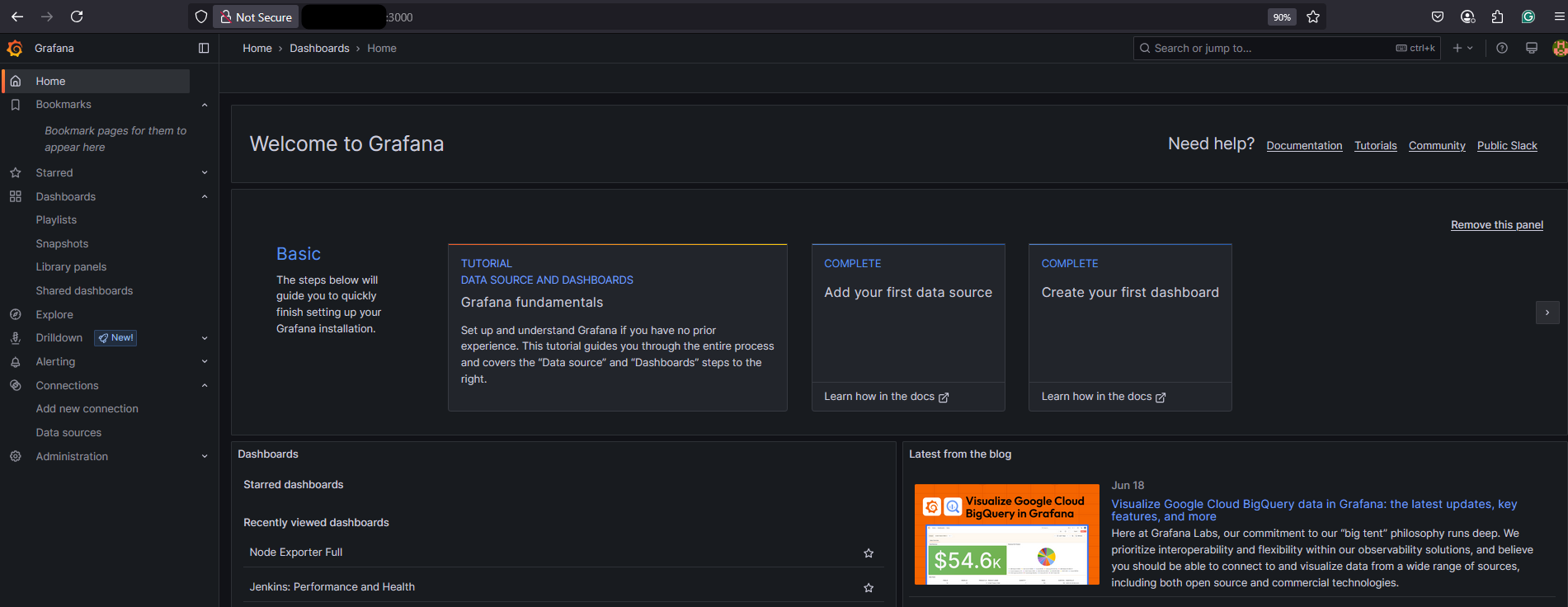
Now open the Grafana dashboard
```
http://your-grafana-server-ip:3000
```
Add Prometheus Data Source:
To visualize metrics, you need to add a data source. Follow these steps:
Click on the Add new data source
Now select the Prometheus
Set the name of your server, enter your worker's IP address with the corresponding port, and then click Save and Test.
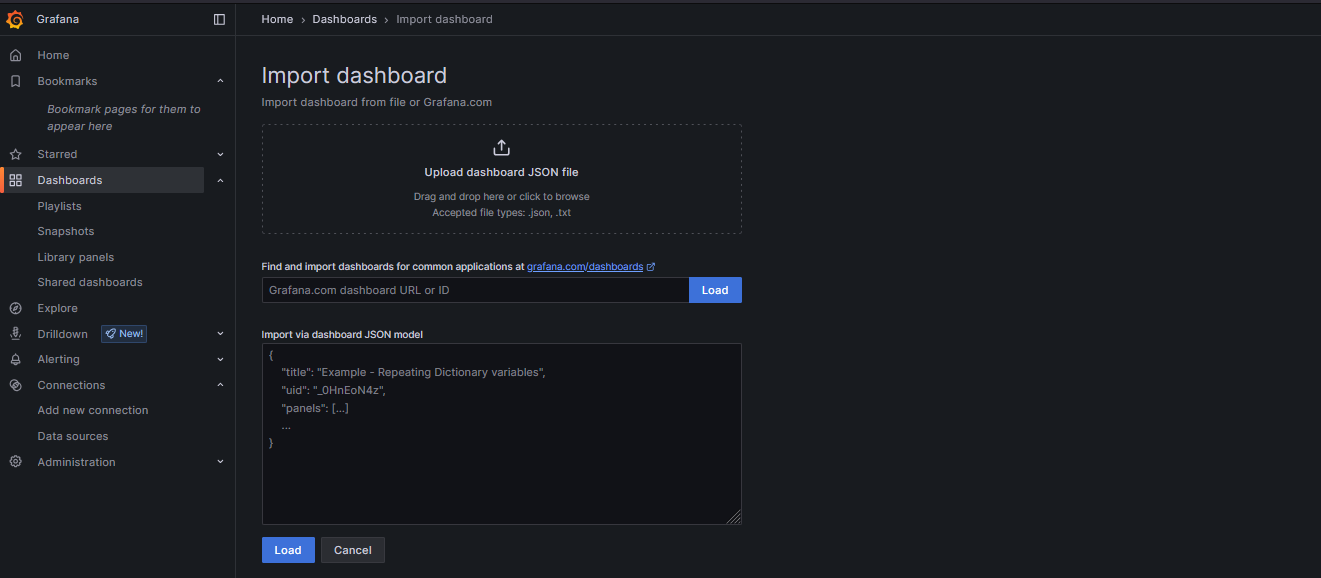
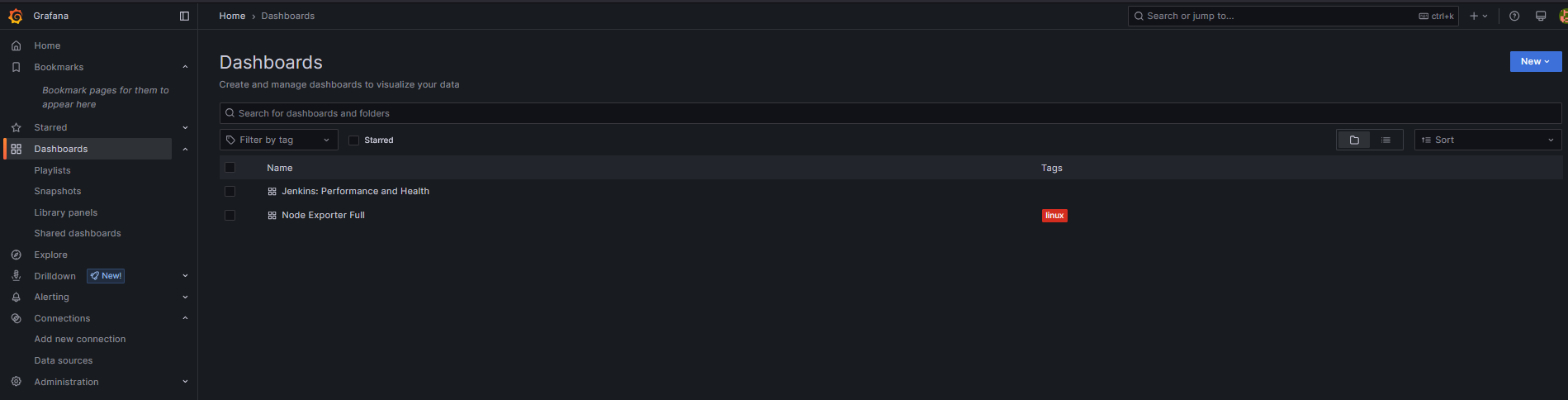
Now, go back to the dashboard section and add a new dashboard.
For the node exporter ID, navigate to the node exporter [website ](https://grafana.com/grafana/dashboards/1860-node-exporter-full/)
We are using the ID:- 1860
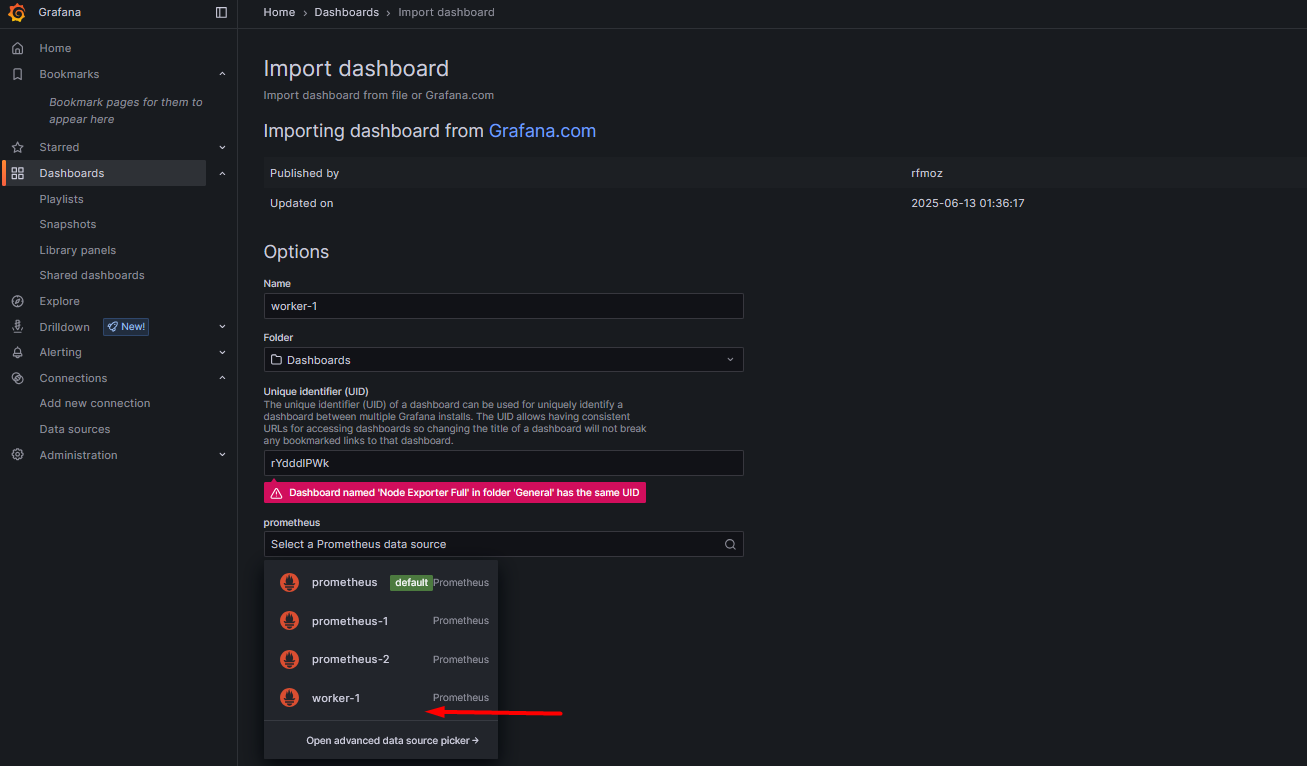
To import a dashboard, fill in the details such as the server name, select the dashboard folder, enter the UID, and choose Prometheus as the data source type. Click on the import
After clicking on the final import.
Now you can see the data is visible.