> For the complete documentation index, see [llms.txt](https://docs.neevcloud.com/llms.txt). Markdown versions of documentation pages are available by appending `.md` to page URLs; this page is available as [Markdown](https://docs.neevcloud.com/neevcloud-account/getting-started-with-neev-account/enable-two-factor-authentication-in-neevcloud-account.md).
# Enable Two-Factor Authentication in Neevcloud Account
In this guide, we will explain how to set up two-factor authentication in NeevCloud Account, enhancing your server’s security with an additional verification layer.
### **Enable two-factor Authentication**
**Two-factor authentication (2FA)** adds an extra layer of security to your Ubuntu system by requiring two forms of identification before granting access. In addition to the usual username and password, 2FA requires an additional piece of information, such as a one-time password (OTP) generated by an authenticator app.
**Recommended apps**
* [Parichay Authenticator](https://play.google.com/store/apps/details?id=com.nic.parichayauthenticator)
* [FreeOTP for Android](https://totp.neevcloud.com/releases/freeotp.apk)
* [Google Authenticator](https://play.google.com/store/apps/details?id=com.google.android.apps.authenticator2)
* [Microsoft Authenticator](https://play.google.com/store/apps/details?id=com.azure.authenticator)
First, install a TOTP authenticator app on your mobile device.
Here is a method to enable two-factor authentication (2FA).
Navigate to the NeevCloud dashboard and select the 'Account' section.
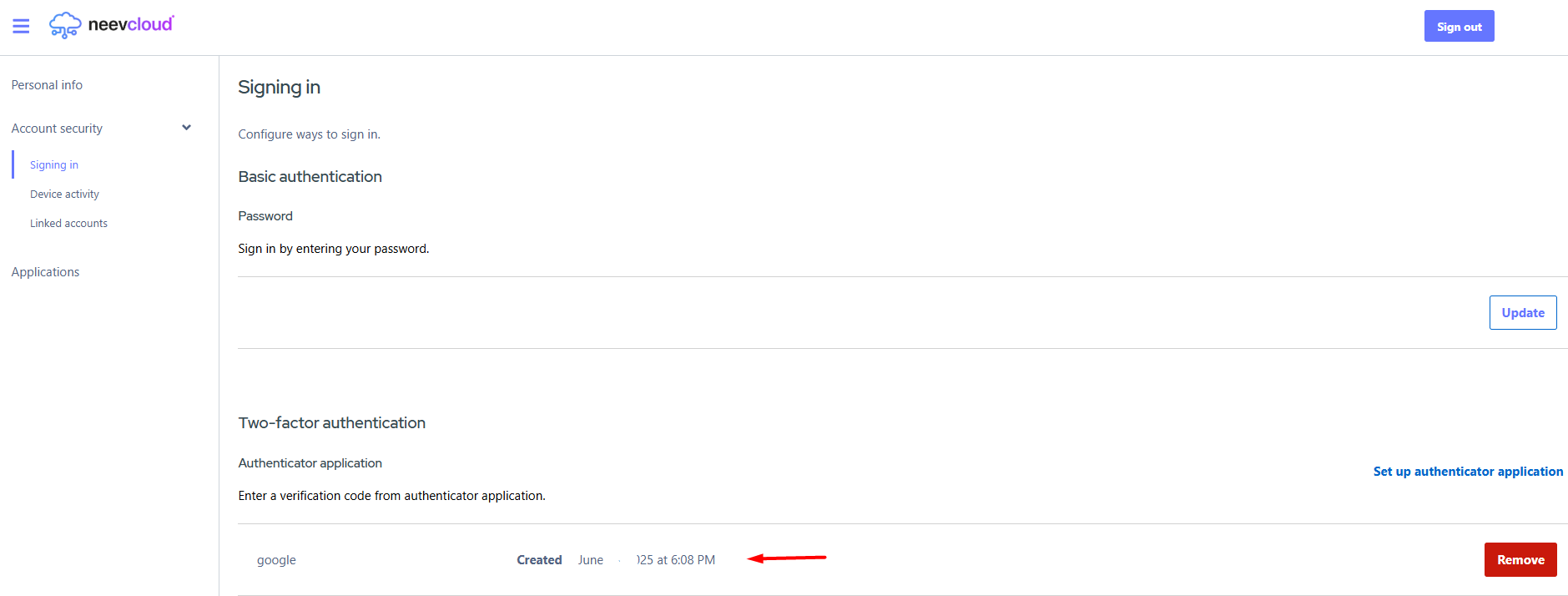
Click on the singing section
Click on 'Set up Authenticator Application' to proceed with the configuration.
Open your Authenticator app and scan the displayed QR code. Once scanned, enter the verification code generated by the app to complete the authentication process.
Give the name device and click on the submit.
After submission, you can verify that authentication has been successfully enabled.
To proceed, log out of your current session and then log back in to ensure all configurations are properly loaded
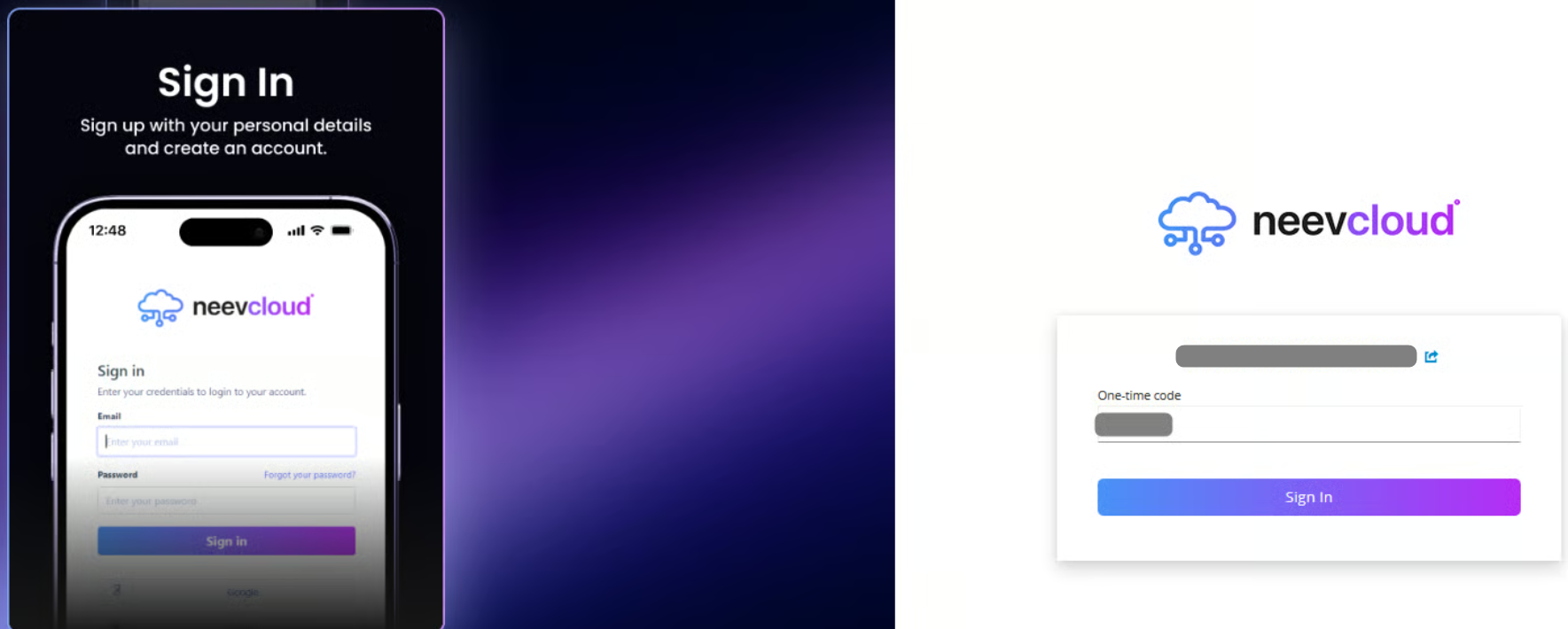
Enter your registered email address and password to proceed.
Now, open your Authenticator app. You will see the latest verification code generated, enter this code and click 'Sign In' to proceed.
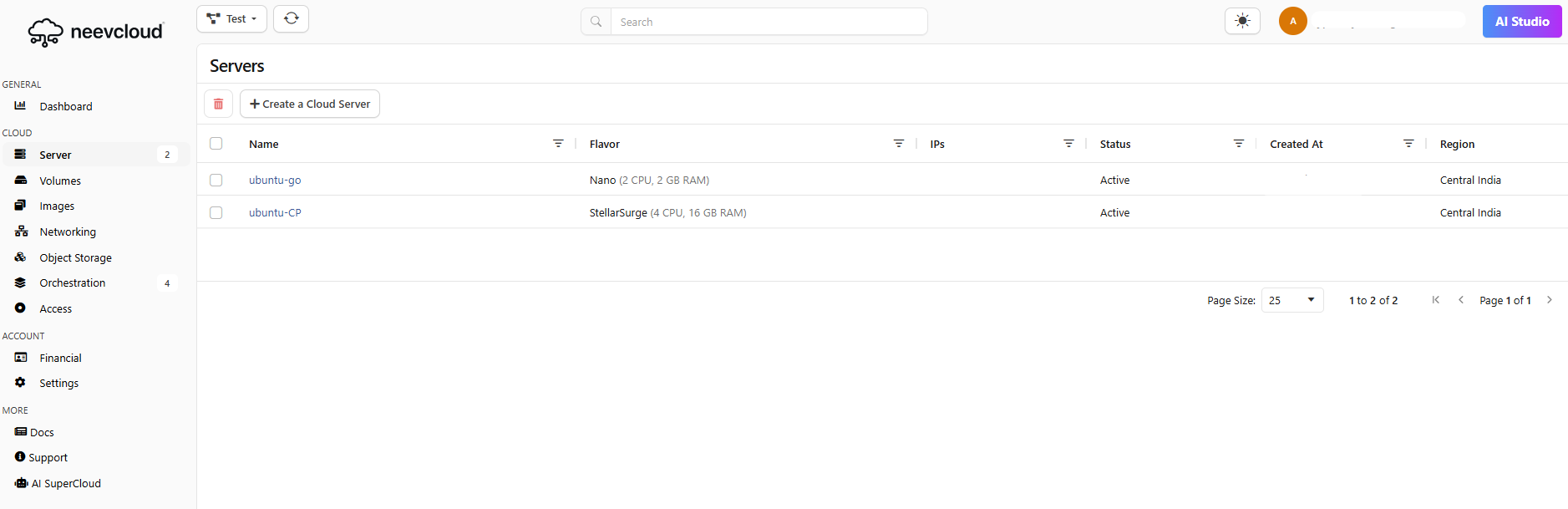
Your account is now accessible.