> For the complete documentation index, see [llms.txt](https://docs.neevcloud.com/llms.txt). Markdown versions of documentation pages are available by appending `.md` to page URLs; this page is available as [Markdown](https://docs.neevcloud.com/neevcloud-products/storage/s3-data-migrations/migrate-from-aws-s3-storage-to-neevcloud-s3-storage.md).
# Migrate from AWS s3 storage to NeevCloud s3 storage
## Prerequisites
Select any Linux operating system to perform these processes.
We have chosen the operating system **Ubuntu 22.04**
Launch the [Instance](https://docs.neevcloud.com/neevcloud-products/computes/getting-started-launch-vms).
## Setup AWS
For AWS Configuration:
Click on the AWS Console Login
### Create a bucket in AWS s3 storage
After logging in to AWS, search for S3 storage service and create a bucket.
### To set bucket policy and permission
After creating the bucket apply bucket permission and bucket policy
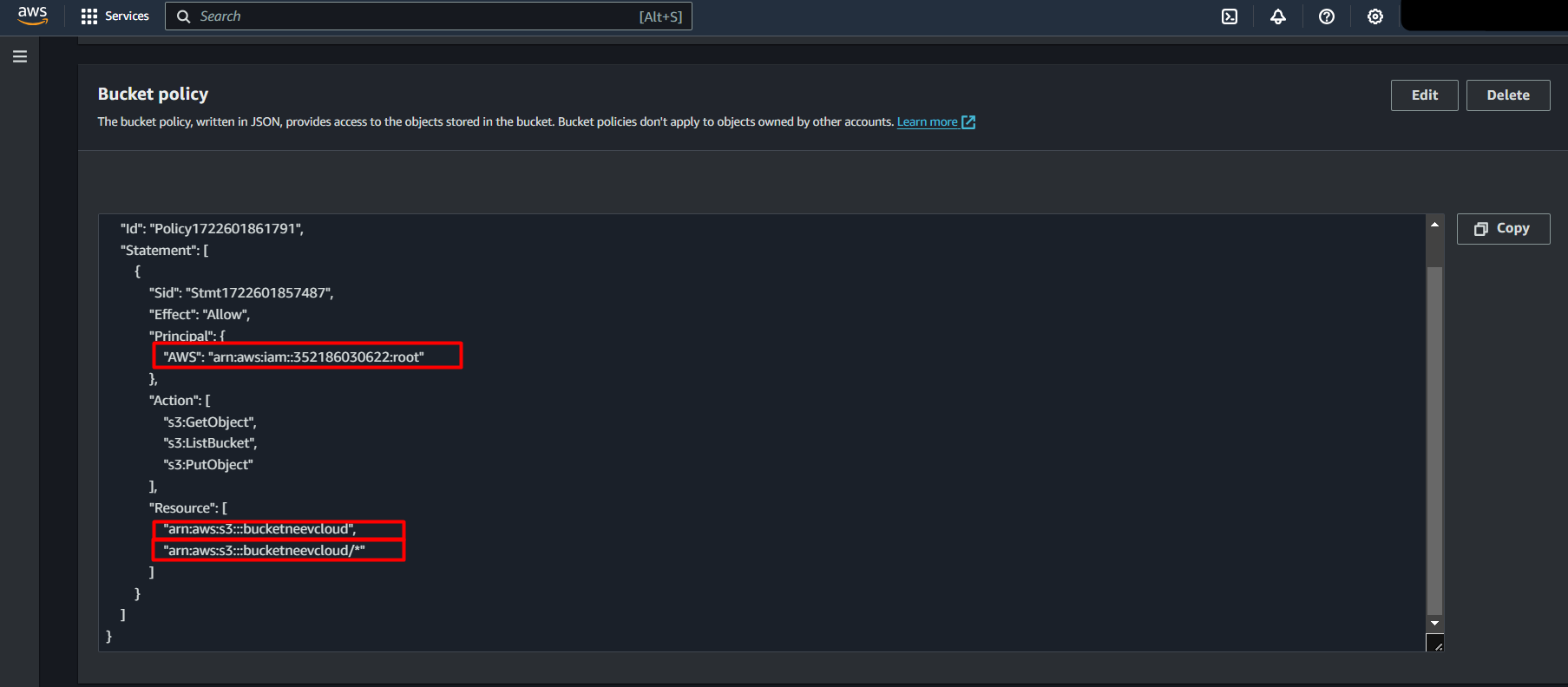
Click on the created bucket > Permission > Bucket Policy > Edit
Update this policy type to allow modifications to the bucket name, user name, and user account ID in this section.
{% hint style="info" %}
When applying a bucket policy, ensure you customize the values based on your requirements. Do not copy this policy directly.
{% endhint %}
### To create Access and secret key
AWS Access & Secret Key Pair navigate to the user section
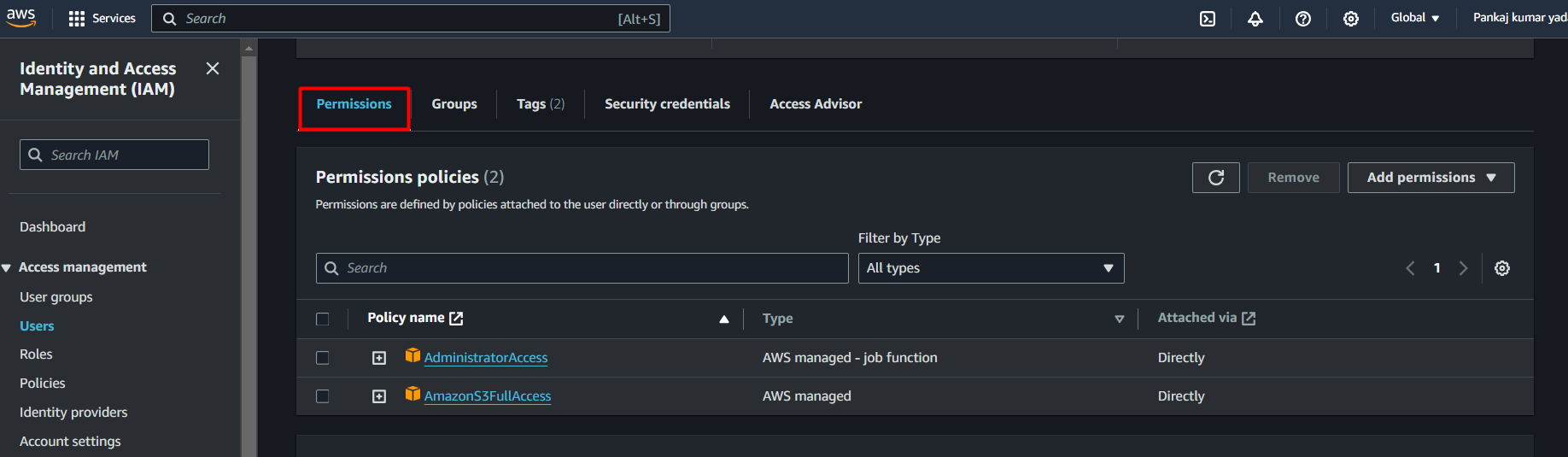
Search for the IAM service and select the existing user to create an access and secret key. If the user does not exist, create the user and assign administrator access permissions.
Verify the user's permission to access the S3 buckets.
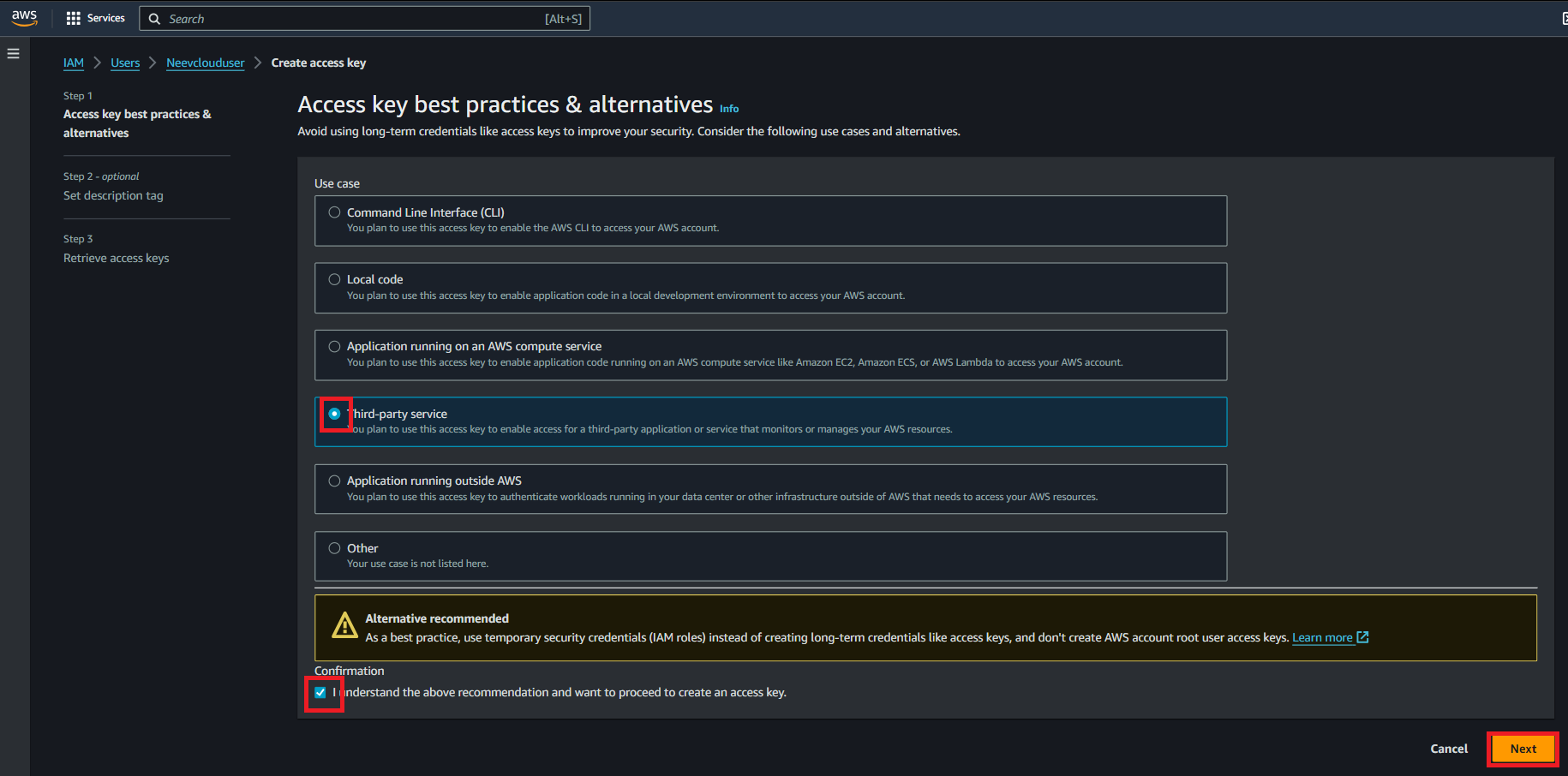
To create the Access and Secret Key, go to Security Credentials.
Security Credentials > Access Keys > Create New Access Key > Select 'Create access key for third-party service.
Before clicking on "Done," first copy the access and secret keys to your notepad.
After performing these processes in AWS, configure the NeevCloud settings.
## Setup NeevCloud
Click on the Neevcloud [**login page.**](https://auth.neevcloud.com/realms/clients/protocol/openid-connect/auth?client_id=neevcloud-ui\&redirect_uri=https://my.neevcloud.com/login\&response_type=code\&state=16d24668-3348-463c-8a25-7aeaf08e0b2a\&scope=openid%20profile%20email%20offline_access\&code_challenge=j5Tz4sDlN1fUkOXBD1oV-9i5RL-4O-HoabHq4aV3PDk\&code_challenge_method=S256)
Neevcloud Bucket - See our [Bucket Creation Guide](https://docs.neevcloud.com/neevcloud-products/storage/object-storage/create-bucket)
Neevcloud Access & Secret Key Pair - See our [Access Keys Guide](https://docs.neevcloud.com/neevcloud-products/access-details/s3-ec2-credentials/create-s3-ec2-credentials)
For more information [**Neevcloud**](https://www.neevcloud.com/)
## **Guide to Move Data from AWS to NeevCloud.**
We used Ubuntu 22.04 as the mediator to facilitate the data migration from AWS S3 to NeevCloud S3.
For example, on a **Ubuntu 22.04** system.
### The first process for AWS
Update && Upgrade the systems.
```
sudo apt-get update -y
sudo apt-get upgrade -y
```
{% hint style="info" %}
For migrating data from AWS to Neevcloud, use **rclone**
{% endhint %}
### Install the configure the rclone
Install and configure the **rclone**.
```
sudo apt-get install rclone -y
```
To configure rclone for **AWS**, and then configure it in **Neevcloud.**
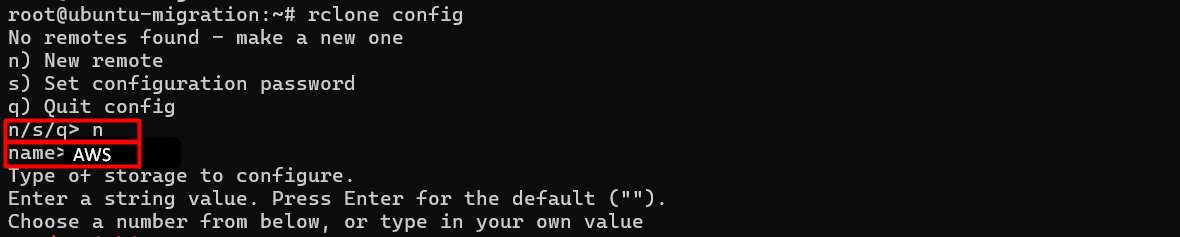
Run the following command to configure ' **rclone** ':
```
sudo rclone config
```
When you run the command above, follow these steps:
Choose 'n' to create a new remote
Name: AWS (Give the name of the remote)
Type of storage to configure to **Choose '4' for Aws s3 compliant storage provider**
Choose your S3 provider to **Choose '1' AWS s3**
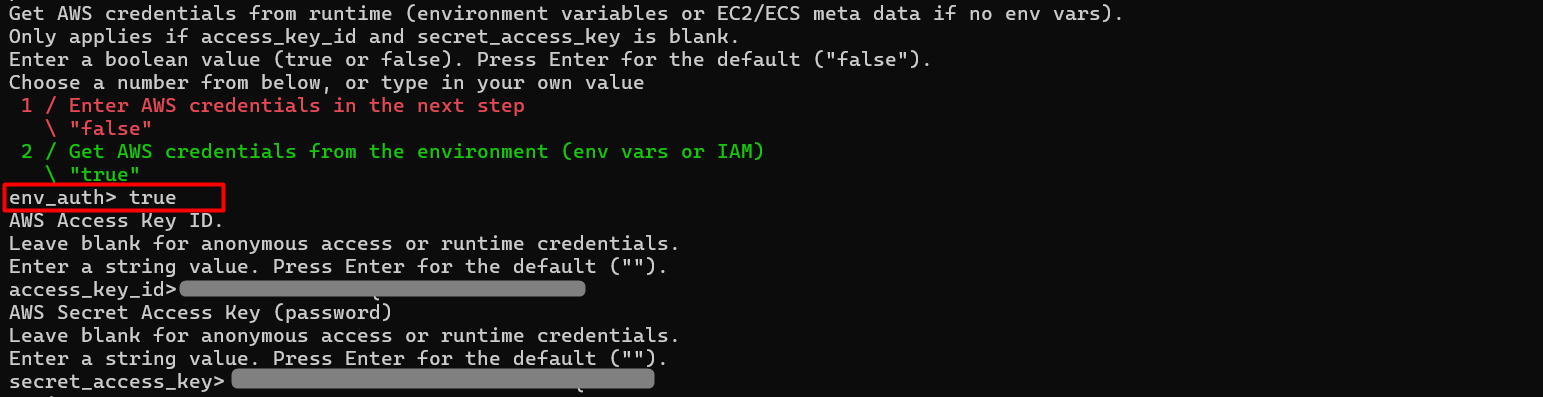
Get AWS credentials from runtime (environment variables or EC2/ECS metadata if no env vars). This only applies if access\_key\_id and secret\_access\_key are blank. Enter a boolean value (true or false). Press Enter for the default ("false"). Choose a number from below, or type in your value
env\_auth: true
Access & Secret key - We have created the above in the AWS section
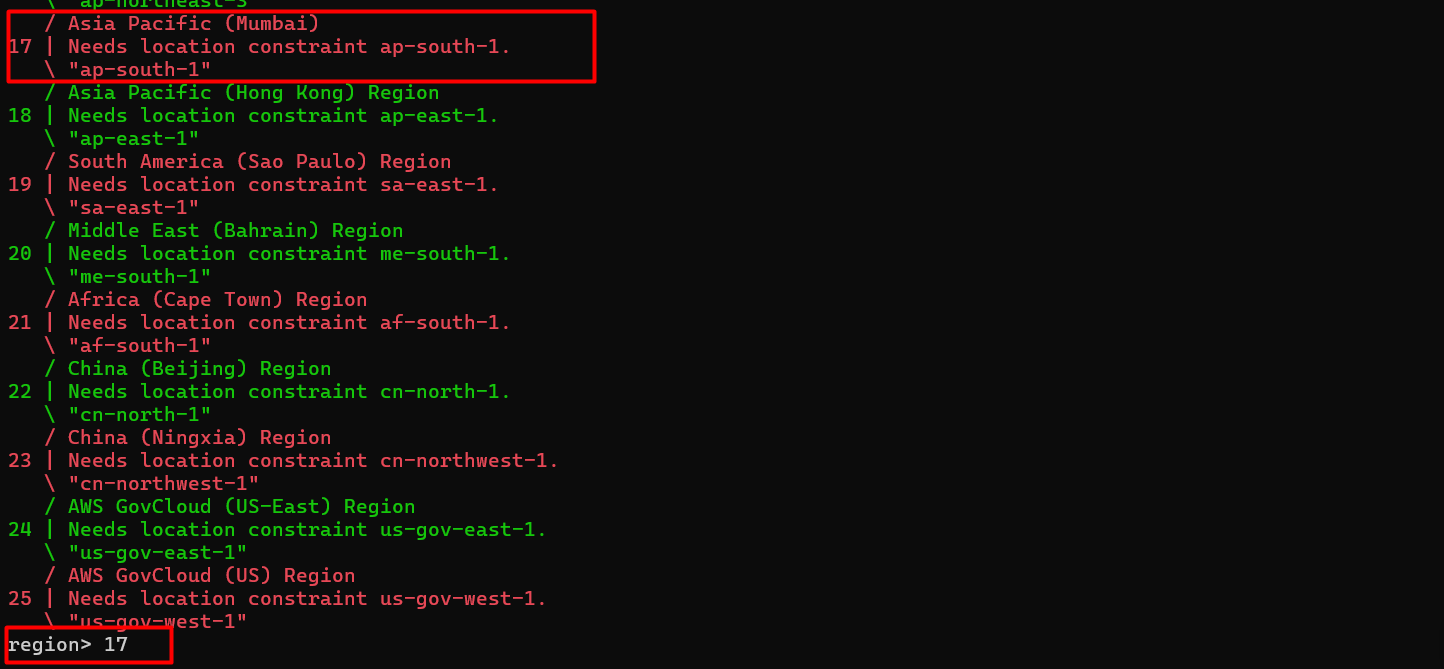
**EndPoint:** Select According to region, we have used the Mumbai region ( **s3.ap-south-1.amazonaws.com** )
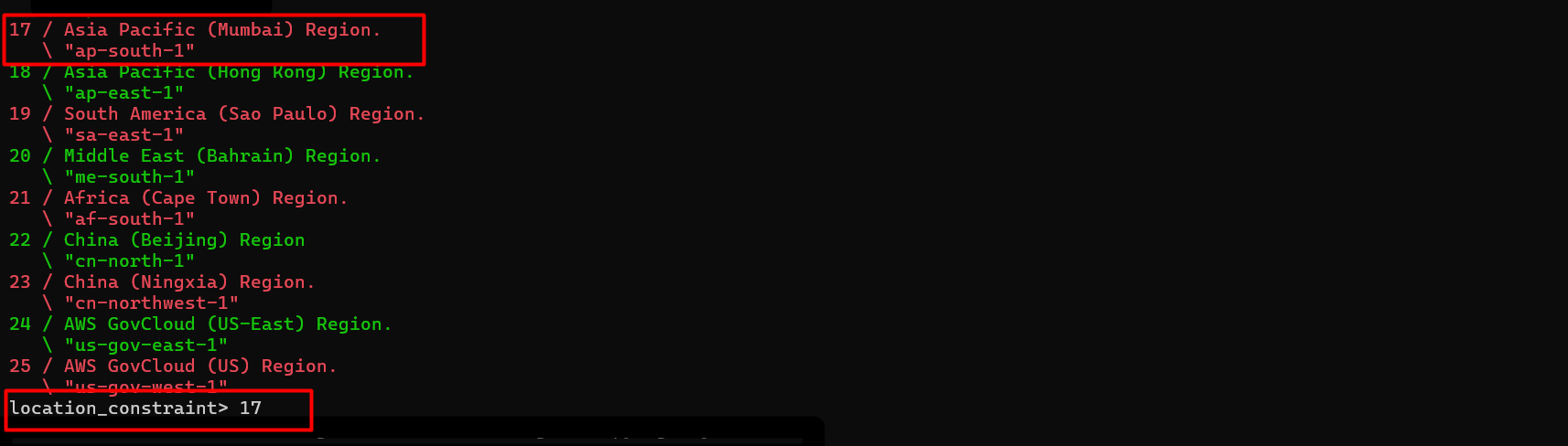
Region to connect to. Enter a string value. Choose a number from below, or type in your value
Choose '17' to Asia Pacific(Mumbai)
Endpoint for S3 API. Leave blank if using AWS to use the default endpoint for the region. Enter a string value. Endpoint> **s3.ap-south-1.amazonaws.com**
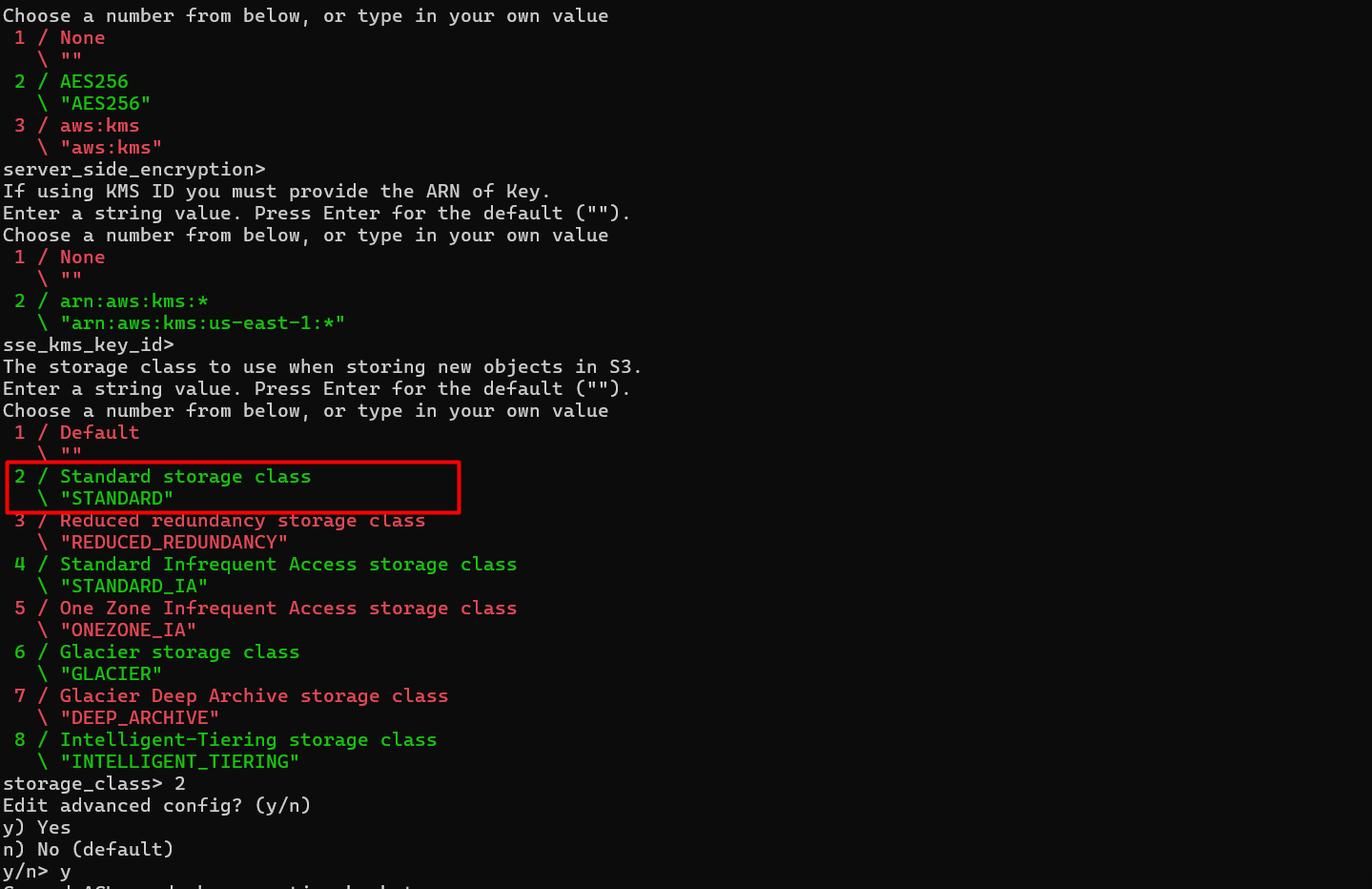
Select the default value press enter, then change only the storage class to choose '2'.
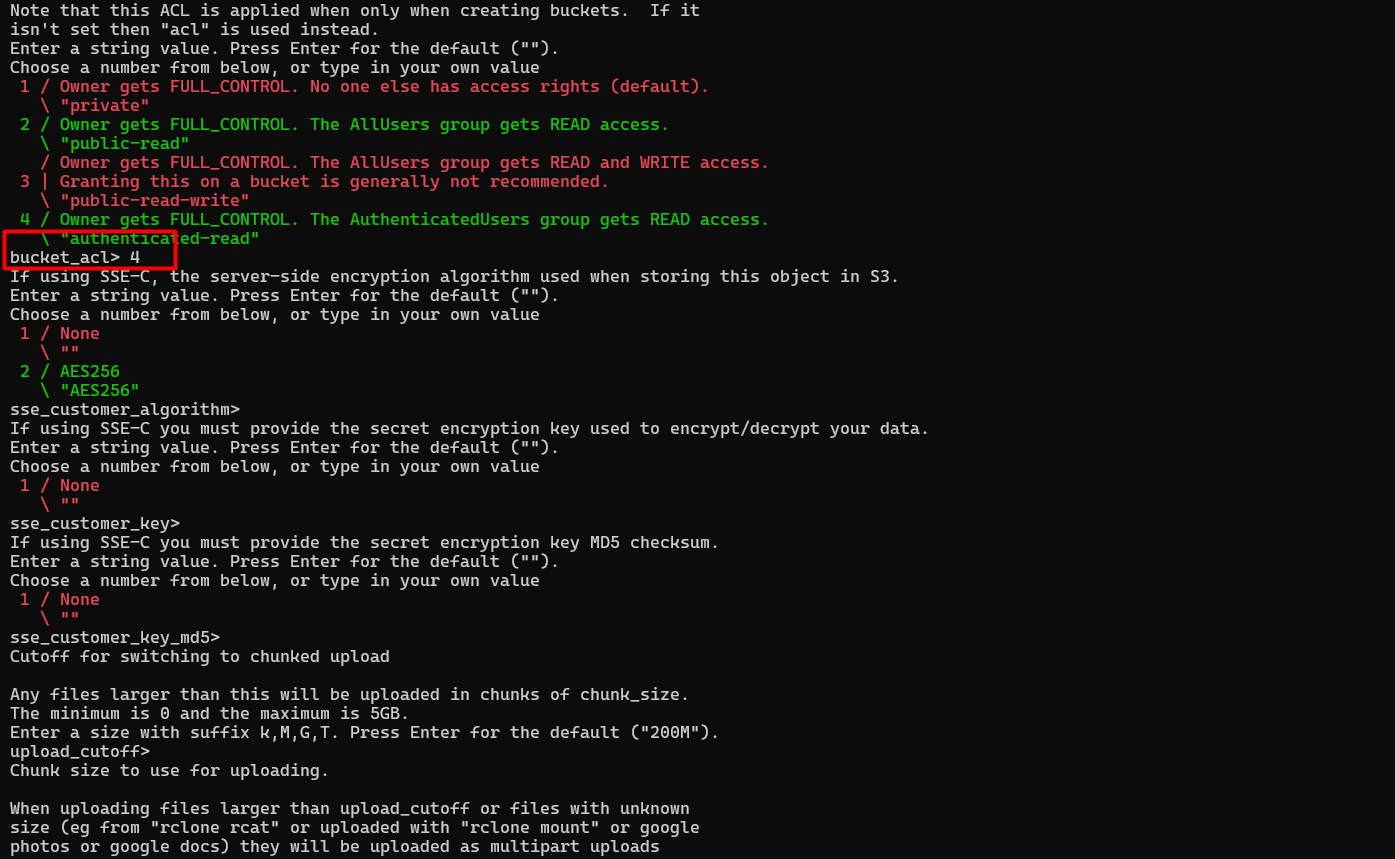
Note that this ACL is applied only when creating buckets to choose '4' and set to all default to press Enter.
After completing these processes, simply press Enter at each step.
This is the remote configuration completed after following these steps:
### Second Process Neevcloud
The same process is now being applied to **Neevcloud**.
Choose 'n' to create a new remote.
Name it 'Neevcloud'
Choose '4' for S3 Compliant Storage Provider
Choose'13' for S3 compatible provider
env\_auth : true
Access & Secret Key - See our [Access Keys Guide](https://docs.neevcloud.com/neevcloud-products/access-details/s3-ec2-credentials/create-s3-ec2-credentials)
EndPoint: **s3-api.neevcloud.com**
Once you have applied the same process, see Configure the details for **Neevcloud.**
{% hint style="info" %}
Ensure you have created buckets in both **AWS** and **Neevcloud** before running these commands.
{% endhint %}
Now complete the configuration to run these commands.
```
sudo rclone move AWS:(aws_bucket_name) Neevcloud:(neevcloud_bucket_name) --progress
```
Now, return to both AWS and Neevcloud to check the status of buckets and details of the data.