> For the complete documentation index, see [llms.txt](https://docs.neevcloud.com/llms.txt). Markdown versions of documentation pages are available by appending `.md` to page URLs; this page is available as [Markdown](https://docs.neevcloud.com/neevcloud-products/volumes/create-a-volume.md).
# Create a volume
"Volumes "refers to the storage resources allocated to VMs, such as virtual hard disks or disk images. These volumes are used to store the operating system, applications, and data for the VM. They can be managed, created, attached, and detached to a VM using various tools and platforms. Volumes are the data part of a container. initialized when a container is created and they allow you to persist and share a container's data.
## Create a custom volume
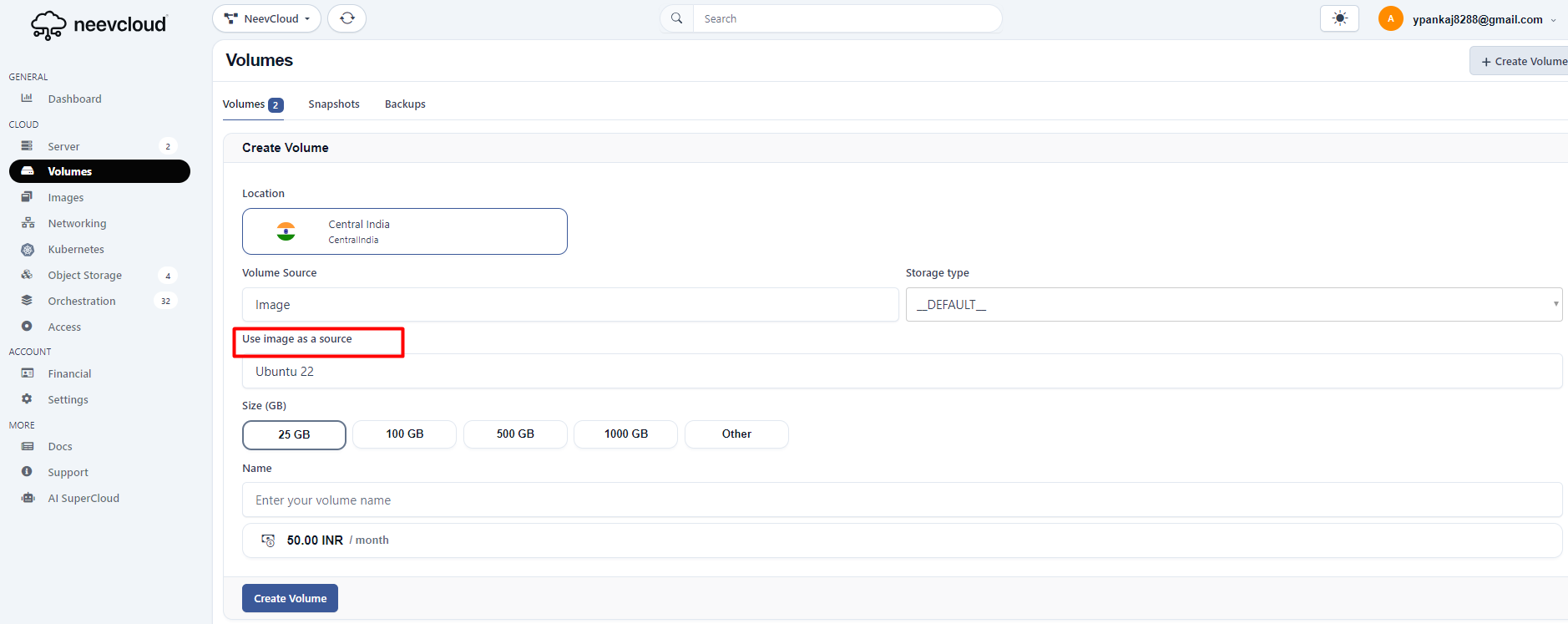
Navigate to the Dashboard, choose the volume section, and then click the Create Volume button in the upper right corner.
### Select Volume Source
We have different types of volume sources: image and snapshot
First, we are using the Image Source, and the storage type is the default
### **Storage Type:**
* **DEFAULT** for general-purpose workloads
* **NVMe** for high-performance workloads
* **Encrypted** for sensitive or compliance-bound workloads requiring [encryption ](/neevcloud-products/security/data-encryption-overview.md)at rest
### Select the Image source
Choose the image. When you select the image, you can directly launch the server using these volumes.
Use the Size, give the name of the volume and click on Create Volume.
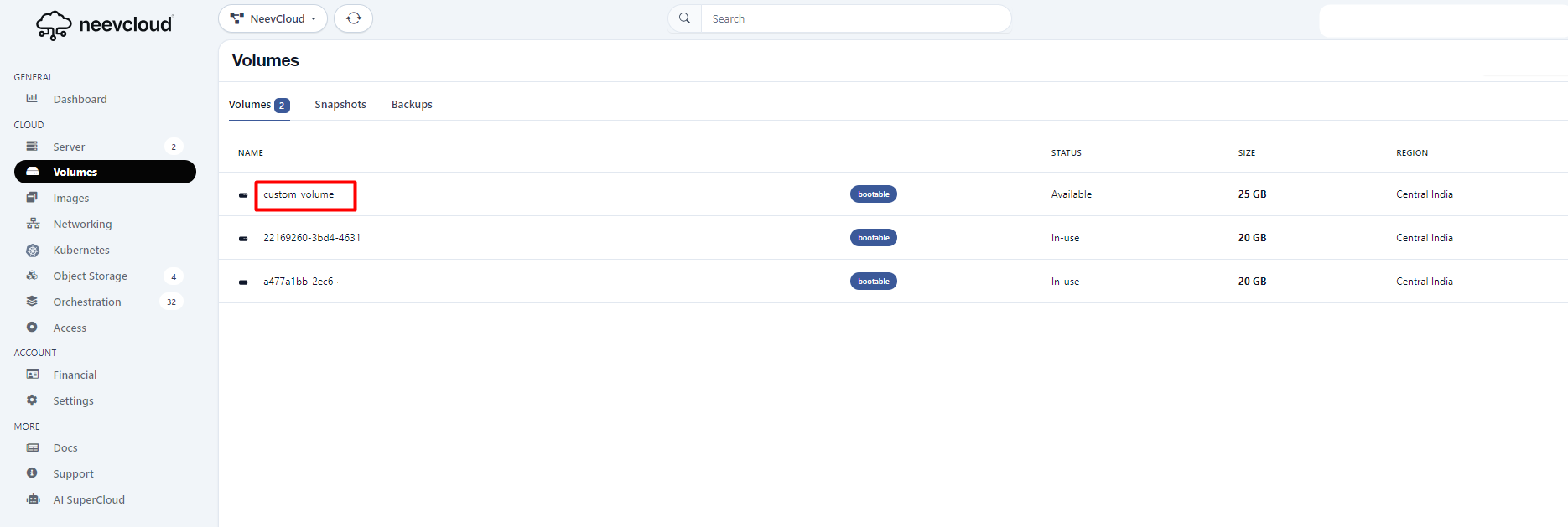
### Verify the status of volume